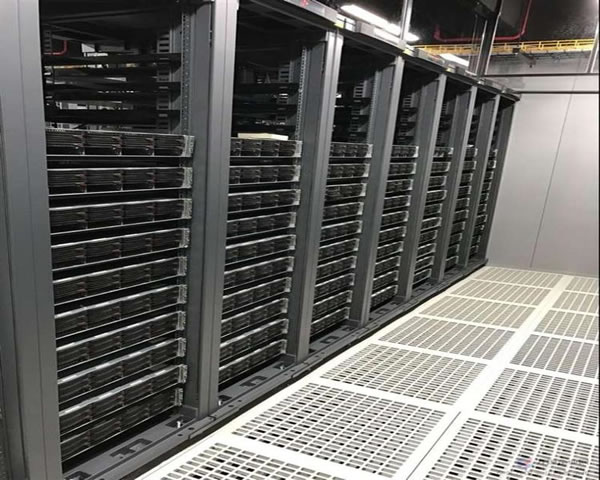
introduction: in the context of the rapid growth of the digital economy and cloud services, the policy and tax environment have become key factors in determining the location and return on investment of data centers in thailand. this article analyzes which areas are more suitable for building and expanding computer rooms from the dimensions of supervision, incentives, power and connectivity, and provides decision-making reference for investors and operators.
policy background: digital strategy and regulatory trends
the thai government promotes the transformation of the digital economy and has introduced a series of policies to support industrial upgrading, while emphasizing data protection and network security regulations (such as legislation related to personal data protection). regulatory trends not only bring compliance costs, but also create market demand for computer rooms with high compliance and the ability to provide localized services. policy stability and transparency are important considerations in attracting long-term investment.
taxation and investment incentives: local and national level impacts
investment incentives exist for technology and infrastructure projects in thailand, including tax and non-tax incentives provided by economic development agencies. different regions and industrial parks may enjoy differentiated incentives, and investors need to evaluate tax incentives and compliance requirements based on project size and purpose to maximize capital efficiency and shorten the payback period.
power supply and renewable energy layout
data centers rely heavily on reliable power, and power costs and supply stability directly affect operating costs and availability. as renewable energy is promoted and corporate demand for green power increases, computer rooms located close to large power generation or renewable power supply sources become more attractive. at the same time, distributed power and backup solutions are factors that must be considered when selecting a site.
network connectivity and the advantages of submarine optical cable implementation
network connectivity is an important component of data center value. coastal cities and communication hubs usually have more submarine optical cable landing points and international links, which can provide low-latency and high-bandwidth access. internal backbone fiber coverage and distance to major cloud service provider interconnection points will also determine network costs and service quality.
natural disaster and operational risk management
site selection needs to assess the impact of natural risks such as floods and typhoons as well as geological conditions on facility safety. certain areas have historically been at risk of seasonal flooding, so topography, drainage capacity and emergency plans are key to determining sustainable operations. lower-risk areas facilitate lower insurance and backup infrastructure costs.
analysis of major investment hotspots
in terms of comprehensive policies and supporting infrastructure, the bangkok metropolitan area is still the first choice due to market demand and concentration of interconnected resources; the eastern economic corridor (eec) and adjacent industrial zones such as chonburi and rayong have attracted attention due to their proximity to ports, power and industrial supporting facilities; places in the central region such as ayutthaya and bang paine attract computer room layouts due to their advantages in land and connected industrial parks, while the north and south are suitable for special scenarios and disaster recovery centers.
layout strategies for coastal industrial parks and urban agglomerations
coastal industrial parks combine port, energy and communication resources and are suitable for building large-scale or modular data centers; while small computer rooms in urban agglomerations are more suitable for edge computing and low-latency applications. investors should weigh location selection between centralization and marginalization based on business focus (cloud services, content distribution, enterprise private networks).
summary and suggestions
conclusion: the policy and tax environment significantly affect the location hotspots of data centers in thailand. when making decisions, investors are advised to: first, assess the long-term sustainability of local policies and tax incentives; second, prioritize power, network and geological risks; third, choose different layouts such as bangkok core, eec industrial zone or central backup node based on business type. multi-dimensional due diligence and communication with local regulatory agencies will significantly improve the project success rate.
- Latest articles
- The Latest Hands-on Guide Teaches You How To Deploy Conoha Singapore CN2 To Enhance Your Overseas Travel Experience
- Is It Possible To Use Cheap Hong Kong Servers? A Guide To Evaluating Both Performance And Security
- Deployment Process: Smooth Migration Steps From Testing To Production Of The Vietnam Cloud Server Database
- Practical Guide To Migrating German VPS Managed Operations: Seamlessly Implementing Domain Names And Databases
- The Impact Of Renting Hong Kong Cloud Servers On SME Operating Costs And Ways To Save Money
- Cybersecurity Best Practices Deployed On Thailand's High-defense VPS WAF And Rule Strategies
- A Beginner's Tutorial To Test Singapore VPS Compatibility With Nephi
- Practical Tool Recommendation: Where Can Hong Kong Native IP Guangsuanyun Addresses Be Used For Speed Testing?
- Recommended Japanese VPS Normal Latency Measurement Tools And Result Interpretation Methods
- Common IP Setting Errors And Solutions For Singapore Servers Explained In Detail
- Popular tags
-
How To Transfer League Of Legends To Thailand Server Smoothly
This article will provide detailed descriptions on how to successfully transfer League of Legends to the Thai server, including steps, precautions and optimization suggestions. -

Gaming Industry Special Edition: Thailand Acceleration Server Rankings And Player Experience Report
This article is a special edition for the gaming industry: Thailand Accelerated Server Rankings and Player Experience Reports, introducing evaluation methods, key metrics, tiered rankings, and practical advice to help players and operators optimize their experience. -

FAQ Collection: Infinite Rule + Thailand Server Disconnection And Lag Solutions
A practical guide to "Unlimited Rules for Solving Common Problems + Thailand Server Disconnection and Lag Response," covering cause analysis, troubleshooting processes, and optimization strategies, suitable for operations and network optimization scenarios.